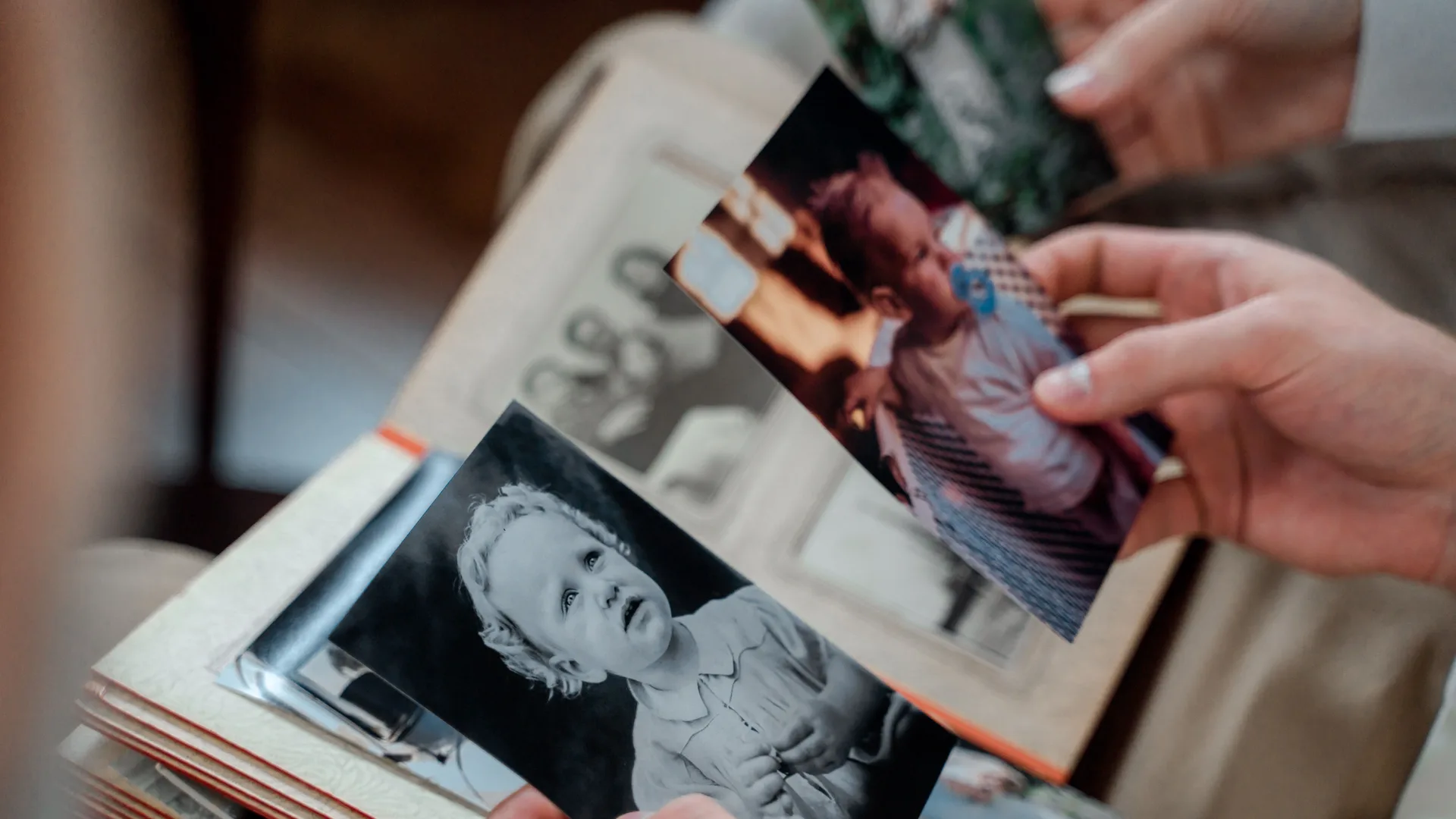
 Photo:
A family story is a useful starting point; the application depends on the legal history behind it. The decisive facts include who held Slovenian citizenship, when they held it, where each generation was born and whether an acquisition or loss of citizenship changed the family line.
The phrase “citizenship by descent” often brings these different cases together. The government’s citizenship guidance distinguishes acquisition by origin from naturalisation. A successful assessment identifies the appropriate basis before the applicant starts ordering certificates.
Which citizenship question comes first?
| Family situation | Initial legal question |
|---|---|
| A parent was Slovenian when the applicant was born | Was citizenship acquired automatically, or is a registration/declaration needed? |
| Old records suggest the applicant or parent was already a citizen | Is recording or determination of existing citizenship appropriate? |
| The connection is through an emigrant ancestor | Does a residence-based naturalisation provision apply? |
| The applicant lives abroad and has sustained Slovenian community ties | Is extraordinary naturalisation on national grounds relevant? |
These are starting questions, not eligibility decisions. For example, a young adult born abroad to a continuously Slovenian parent may have a declaration route to assess, while a person with only a Slovenian-born grandparent needs a different analysis. This comparison is illustrative; no individual client outcome is implied.
Slovenia Law’s citizenship-by-descent assessment maps those facts against the possible routes and identifies which records are worth obtaining first.
A Slovenian parent: automatic acquisition or an application?
When citizenship follows by origin
Under Articles 4–6 of the Citizenship Act, both parents being Slovenian citizens at the child’s birth is one basis for citizenship by origin. Another is birth in Slovenia with one Slovenian parent. Birth abroad with one Slovenian parent and a foreign-national other parent raises a different registration question.
For that latter situation, registration ordinarily needs to happen before the child turns 18. Special circumstances, including statelessness, adoption or settlement in Slovenia with a Slovenian parent, require their own assessment rather than a blanket rule about every child born abroad.
An adult born abroad and the age-36 deadline
The adult declaration provision is more specific than “one parent used to be Slovenian”. Article 6 requires a declaration before the applicant turns 36, a parent’s Slovenian citizenship continuously from the applicant’s birth until the declaration — or until that parent’s death — and no termination of the applicant’s Slovenian citizenship by release, renunciation or deprivation after age 18.
Dates and continuity therefore matter alongside the parent-child relationship. A parent obtaining citizenship only after the child’s birth does not establish that continuous-from-birth condition. Close-deadline cases need prompt individual assessment of the actual records and filing requirements.
The age limit concerns this acquisition route. It is not a general deadline for investigating whether someone already acquired citizenship under another provision.
What if the family may already have Slovenian citizenship?
A citizenship-determination case asks about an existing legal status, rather than admission as a new citizen through naturalisation. The official consular determination form requests family, residence and historical information and explains why the rules in force at the relevant ancestors’ births matter.
A Slovenian birthplace, a surname or a former Yugoslav document may contribute to the investigation without settling its result. The records need to establish the relevant citizenship history, not simply a connection to a place on today’s map.
For an older family line, a chronology can show where a citizenship record is missing, whether a foreign naturalisation or release needs investigation, and which authority or archive may hold the next useful record. The legal significance of each event depends on its date and circumstances.
Naturalisation through an emigrant ancestor: two distinct routes
Article 12: a route involving residence in Slovenia
The government’s naturalisation overview describes a route for a Slovenian emigrant or a direct-line descendant up to the fourth degree who has actually lived continuously in Slovenia for at least one year before applying. Regulated foreigner status and other statutory conditions also apply; the decision is discretionary under the Act.
The year of residence is therefore one condition, rather than a promise of citizenship after a year. The family relationship, actual residence and remaining naturalisation requirements need to be assessed together.
Article 13: extraordinary naturalisation on national grounds
The Embassy in Washington’s Article 13 guidance describes the national-grounds route for people of Slovenian descent up to the second generation in the direct line. It calls for a multi-year active connection with Slovenia and at least five years of activity in relevant Slovenian associations, language schools or expatriate, emigrant or minority organisations. Any exception is a matter for the Slovenian Government.
For qualifying national-ground cases, residence relief may be available. That does not make this an automatic passport route for every grandchild. National interest and the evidence of the applicant’s connection remain central.
The fourth-degree residence-based provision and the second-generation national-ground criteria must stay separate. Evidence fitting one does not by itself establish the other.
What does a useful evidence file contain?
The file has three different jobs: establish the family relationship, explain the relevant citizenship history and satisfy the chosen route’s additional conditions.
The direct family line and identity changes
Birth and marriage records connect the applicant to the relevant parent or ancestor. Adoption and name-change records may explain a link that is otherwise unclear. The Article 13 application and enclosure list illustrates the distinction between proving origin and supplying the other evidence required for that procedure.
A practical research table records each person’s name variants, birth and marriage details, emigration dates and known citizenship events. Which entries a case actually needs is something Slovenia Law confirms against the specific family line before an application is assembled. This is a preparation tool, not a substitute for official evidence.
Citizenship history and the active connection
Older passports, citizenship records and other official documents may help establish status. The determination form shows why older family cases can require more than modern birth certificates.
For an Article 13 case, dated evidence of actual participation matters separately from the family tree. The official application materials include proof of sustained active involvement. Recent membership on paper should not be presented as evidence of activities over earlier years.
Translation and certification
The form of a document depends on where it was issued and the procedure receiving it. Consular instructions may call for authentication and Slovenian translations, but a US-specific apostille or criminal-record instruction is not a universal rule for every country. The document sequence is settled before translations are commissioned, reducing the risk of paying twice for an incomplete file.
Two grandchildren, two different routes
Two grandchildren of the same Slovenian emigrant can stand in very different positions. If the citizenship line was kept alive — a parent registered or declared in time — a grandchild may qualify as the child of a Slovenian citizen, subject to the applicable conditions. If the line was broken, a claim through the grandparent alone does not establish that parent-based entitlement, and naturalisation under Articles 12 or 13 may need to be assessed instead, with its own residence or national-interest conditions. The family tree looks identical; the legal entitlement does not. This is an illustrative comparison, not an individual eligibility decision.
Filing, costs and keeping another citizenship
The Embassy’s citizenship guidance explains that consular applications can be forwarded to the competent Slovenian authorities. The filing location and personal steps depend on the route. Consular receipt of a file is distinct from a decision granting citizenship.
The cost has separate components: official charges, records, any certification or translation, and professional assistance. The timetable depends on the records already available, gaps in the family history and authority processing. A reliable scope of work identifies those dependencies rather than promising one price or completion date for every ancestry case.
On dual nationality, Slovenia’s official guidance identifies release exceptions for qualifying emigrants and descendants under Article 12 and allows retention of previous nationality in extraordinary naturalisation. The law of the other country still needs a separate assessment before any action affecting existing citizenship.
Where descent does not establish an entitlement, other routes may still apply — residence in Slovenia leading to ordinary naturalisation, or citizenship questions for other family members. Slovenia Law can map that alternative from the outset.
A clear next step for the family history
An initial review works best with a short family chronology, the applicant’s age and current nationality, available citizenship records, any previous applications and the intended residence plan. Existing evidence of Slovenian community involvement is relevant where national grounds are being considered.
Slovenia Law’s Slovenian citizenship service can assess the likely legal basis, review the family chain, identify missing records and coordinate preparation of the relevant application. That gives the applicant a focused document plan before committing to extensive archive searches or translations.
Book a citizenship-by-descent consultation to assess which legal question the family records need to answer and what evidence is still missing.
The initial review is free and without obligation; a short family chronology, the applicant’s age and date of birth, and any known citizenship records are enough to start.
This insight provides general information based on official sources checked on 26 October 2026. It does not replace legal advice on an individual citizenship history or another country’s nationality laws.